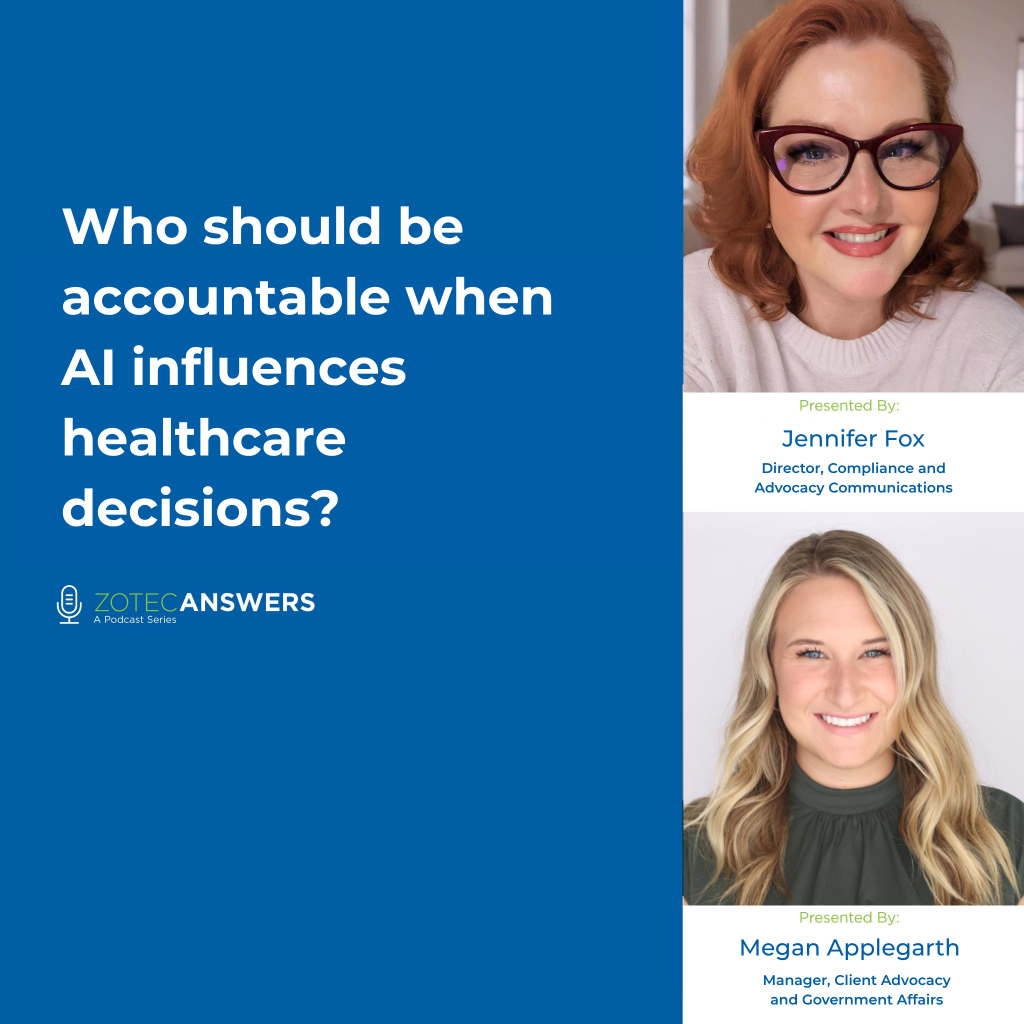
In this episode of Zotec Answers, Jennifer Fox and Megan Applegarth examine how AI regulation, health insurance prior authorization, Medicare oversight, and state laws are shaping the future of healthcare. They explore the benefits AI can offer while addressing a critical concern: When AI influences patient care or coverage, who is ultimately responsible for the outcome?
Key topics include:
Jen and Megan explain that responsible healthcare AI requires more than an accurate algorithm. Organizations must understand how each tool works, who reviews its recommendations, whether results can be explained, and what happens when a physician or patient disagrees.
They also discuss how AI can support healthcare when it solves a clearly defined problem within existing workflows. Real-time documentation support is one example, helping reduce documentation gaps, improve efficiency, and support appropriate reimbursement while keeping physicians responsible for the final judgment.
Learn more about integrated AI documentation support in How Is Zotec’s AI-Driven Documentation Streamlining Patient Care?
Have an idea for a future episode? Email zotecanswers@zotecpartners.com.
About ZPAC: the Zotec Political Advocacy Committee (ZPAC), dedicates itself to making a difference for physicians and healthcare administrators nationwide. ZPAC advocates for equitable access to healthcare services for all individuals. Stay informed and engaged with ZPAC by following our podcast episodes, blog posts, and speaking engagements on our active Twitter/X and LinkedIn profiles. Together, we can shape policies that support healthcare providers and promote equitable access to quality care for all. To learn more about Zotec Partners, visit our website here.


