Is there a viable path forward for national 3D mammography coverage? In this episode of Zotec Answers, Jennifer Fox and Megan Applegarth discuss why access to 3D mammography, diagnostic breast imaging, and supplemental imaging can still depend on a patient’s zip code, health plan, breast density, and cost-sharing rules.
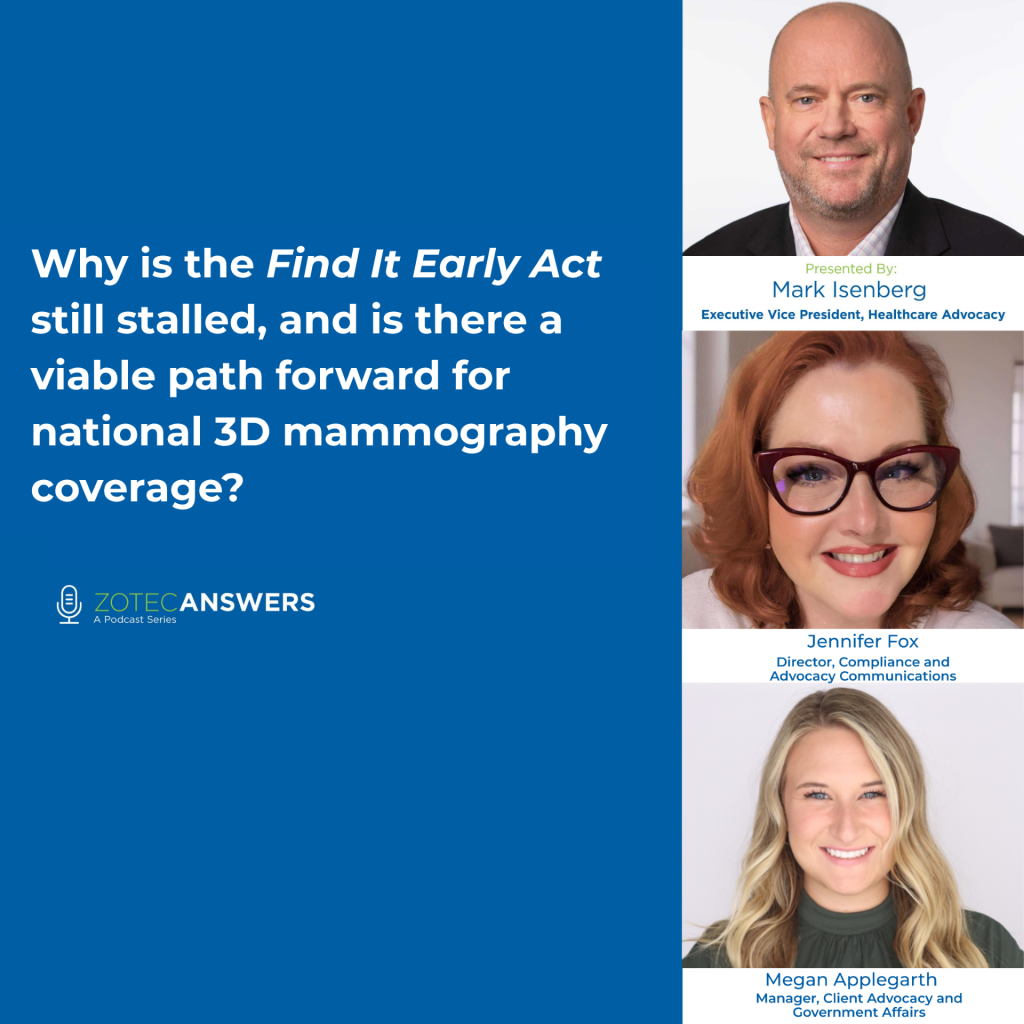
They are joined by Mark Isenberg, Executive Vice President of Healthcare Advocacy at Zotec Partners, to examine the Find It Early Act, a bipartisan federal proposal that would expand coverage for breast cancer screening and follow-up imaging without patient cost sharing. Together, they explore state coverage gaps, ERISA limitations, dense breast tissue, insurer and employer concerns, early detection, and why national breast imaging coverage remains stalled in Congress despite broad support.
October is Breast Cancer Awareness Month, and this episode takes a closer look at a critical healthcare access question: Should coverage for medically recommended breast imaging depend on where a patient lives or what type of insurance card they carry?
Jennifer Fox, Megan Applegarth, and Mark Isenberg break down the patchwork of state breast imaging coverage laws, the limits of state action for self-funded employer plans, and the potential impact of the Find It Early Act.
Key topics include:
The episode also encourages listeners to stay informed ahead of the 2026 midterm elections. For nonpartisan election resources, text ZPVOTE to 50457 to access the Zotec Election Center.
About ZPAC: the Zotec Political Advocacy Committee (ZPAC), dedicates itself to making a difference for physicians and healthcare administrators nationwide. ZPAC advocates for equitable access to healthcare services for all individuals. Stay informed and engaged with ZPAC by following our podcast episodes, blog posts, and speaking engagements on our active Twitter/X and LinkedIn profiles. Together, we can shape policies that support healthcare providers and promote equitable access to quality care for all. To learn more about Zotec Partners, visit our website here.


