In this episode of Zotec Answers, Mark Isenberg, Executive Vice President of Healthcare Advocacy at Zotec Partners, and Ed Gaines, Vice President of Regulatory Affairs and Industry Liaison, break down the 2026 midterm election results and explore what changing congressional leadership could mean for physicians, independent medical practices, healthcare organizations, and patients.
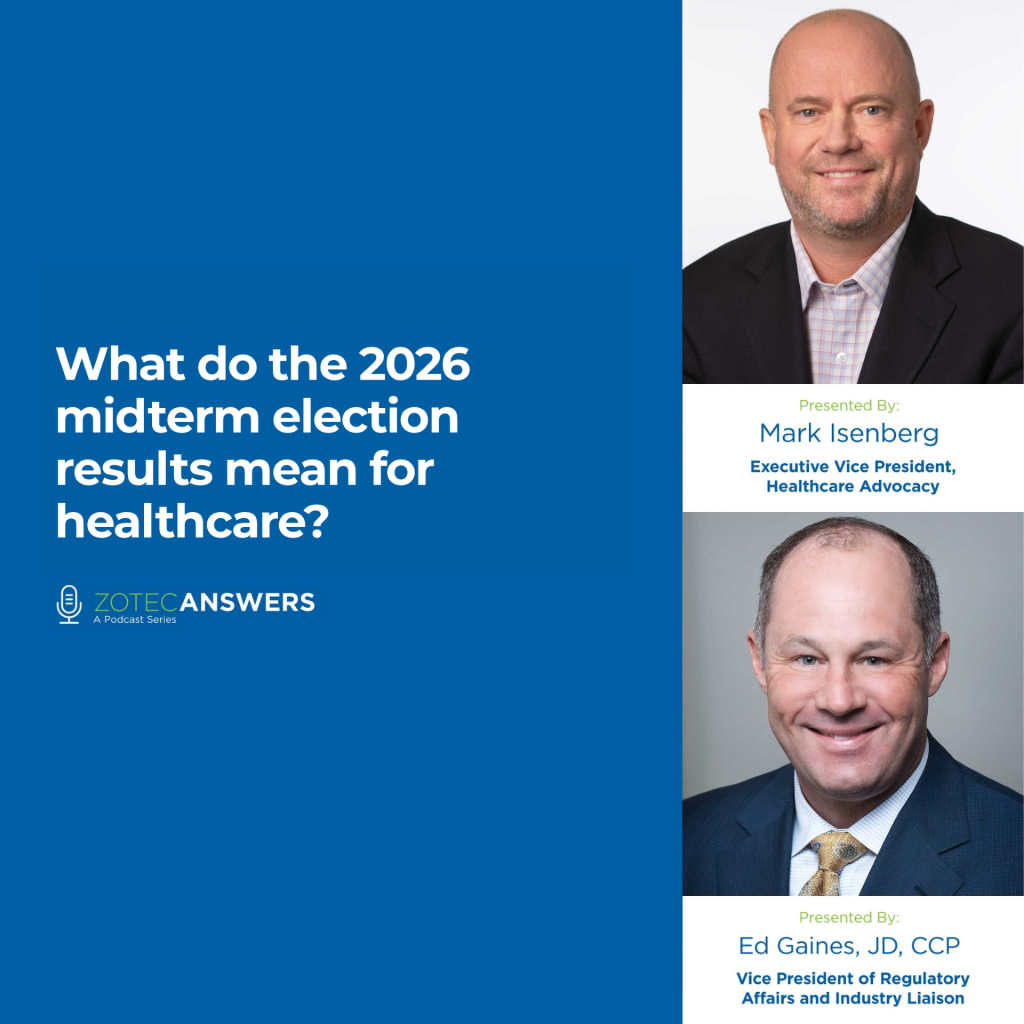
With the 2026 midterm elections behind us, the 120th Congress faces consequential decisions about healthcare affordability, Medicare physician payment cuts, the No Surprises Act, Medicaid, and patients’ access to care.
Mark Isenberg and Ed Gaines explain where bipartisan opportunities may emerge, what physicians and healthcare organizations should watch, and why advocacy remains essential to protecting medical practices and patients’ access to care.
Key topics include:
Mark and Ed examine the opportunities and uncertainties facing the next Congress. This includes the possibility of bipartisan action on Medicare physician payment reform, stronger enforcement of the No Surprises Act, and continued debate over healthcare affordability and Medicaid.
As the healthcare policy landscape evolves, they emphasize the importance of physician engagement, informed advocacy, and collaboration. These measures help ensure federal policies support sustainable medical practices and access to quality patient care.
The 2027 Medicare Physician Fee Schedule raises important concerns about physician reimbursement and patient access to care. Text ZPFIX to 50457 to learn more and urge Congress to support the bipartisan Patients First Act (H.R. 9693), which seeks to improve Medicare physician payment updates.
Stay Informed. Stay Engaged. Subscribe to Zotec Answers for conversations about healthcare policy, physician reimbursement, regulatory developments, technology, and the business of healthcare.
If you found this episode valuable, share it with a colleague, fellow physician, or healthcare advocate.
Have a question or topic you’d like us to explore? Email zotecanswers@zotecpartners.com.
About ZPAC: the Zotec Political Advocacy Committee (ZPAC), dedicates itself to making a difference for physicians and healthcare administrators nationwide. ZPAC advocates for equitable access to healthcare services for all individuals. Stay informed and engaged with ZPAC by following our podcast episodes, blog posts, and speaking engagements on our active Twitter/X and LinkedIn profiles. Together, we can shape policies that support healthcare providers and promote equitable access to quality care for all. To learn more about Zotec Partners, visit our website here.


